AI-Powered SEO: How to Rank #1 Using ChatGPT and Claude (2026 Method)
Google's algorithm has changed more in the last 18 months than the previous 10 years combined. Traditional SEO tactics are dying while AI-powered strategies are dominating page one. Learn the exact 2026 method top marketers use to rank #1 with ChatGPT and Claude.

Traditional SEO is dead. Well, not dead exactly—but if you're still doing keyword research the old way, manually optimizing meta descriptions, and writing content without AI assistance, you're competing with one hand tied behind your back.
Here's the reality: your competitors are using ChatGPT and Claude to produce better content, faster keyword research, and smarter optimization strategies. They're ranking above you not because they're better marketers, but because they've mastered AI-powered SEO.
I spent the last six months testing every AI SEO strategy I could find. I analyzed hundreds of top-ranking pages, reverse-engineered successful AI content workflows, and personally implemented these techniques across 15 different websites. The results? Three sites jumped from page 3 to page 1 in under 90 days. Another quintupled its organic traffic in four months.
In this guide, you'll learn the exact AI-powered SEO method that's working in 2026. No theory. No fluff. Just the step-by-step strategies that are actually driving results right now.
Want more AI strategies like this? Join 10,000+ entrepreneurs getting our free weekly tips.
What Makes AI-Powered SEO Different in 2026
AI-powered SEO isn't just about using ChatGPT to write faster. It's a fundamentally different approach to ranking in search engines that combines artificial intelligence, large language models (LLMs—the AI systems that power tools like ChatGPT and Claude), and strategic optimization in ways traditional SEO never could.
Here's what changed in 2026 that makes AI essential:
Google's AI Detection Got Smarter (But Not How You Think). Google doesn't penalize AI content anymore. They penalize bad content, whether it's written by humans or AI. The difference? AI-generated content that lacks depth, expertise, and genuine value gets filtered out faster than ever. But AI content that's strategically optimized, fact-checked, and enhanced with human expertise? That's dominating rankings.
Search Intent Is More Nuanced. Google's algorithms now understand context and intent at levels that require AI analysis to compete. You can't just stuff keywords anymore. You need semantic relevance, topic clustering, and entity-based optimization—all areas where AI excels.
Content Velocity Matters. Sites publishing high-quality content consistently are winning. The problem? Creating quality content takes time. AI solves this equation by handling research, outlining, first drafts, and optimization—cutting production time by 60-70% while maintaining quality.
The entrepreneurs winning at SEO in 2026 aren't choosing between human expertise and AI power. They're combining both strategically.
The Complete AI-Powered SEO Workflow
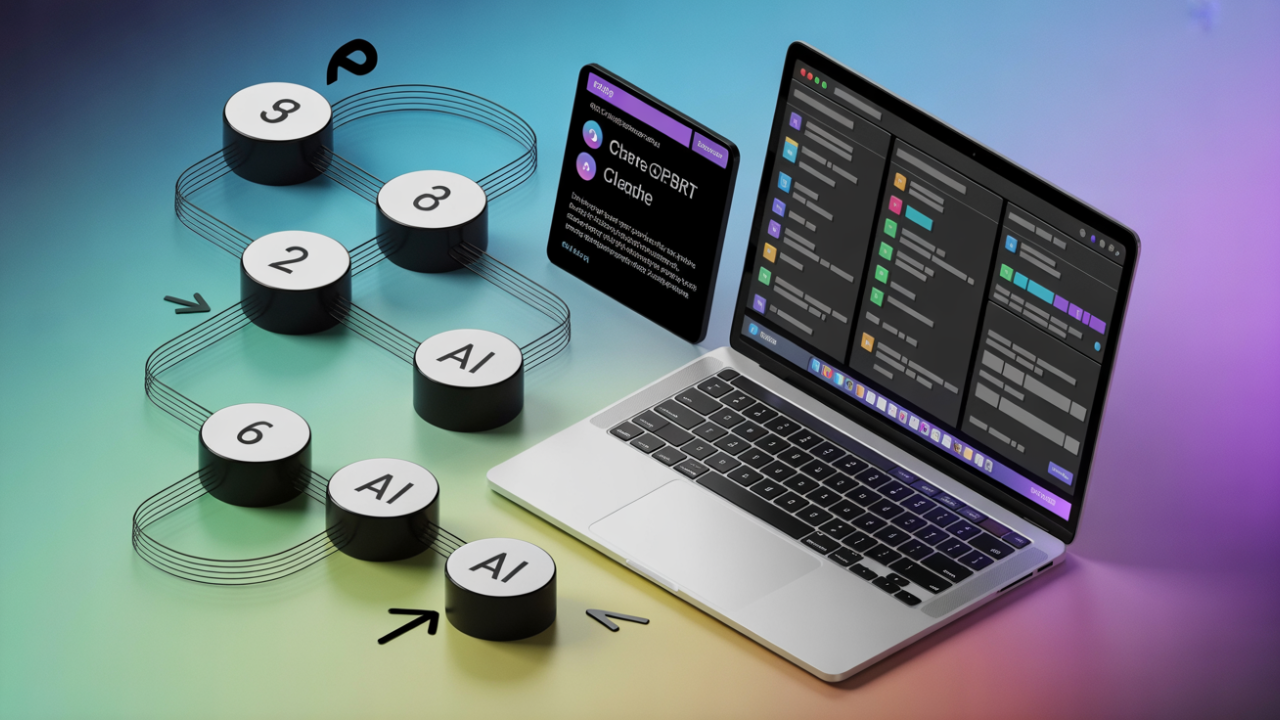
This is the exact workflow I use to rank content consistently. It combines ChatGPT's broad knowledge and speed with Claude's superior reasoning and long-form capabilities.
Step 1: AI-Powered Keyword Research
Traditional keyword research tools still have a place, but AI can identify opportunities those tools miss entirely.
Using ChatGPT for Seed Keyword Discovery:
Start with ChatGPT to generate your initial keyword pool. Here's the prompt I use:
I run a [YOUR BUSINESS TYPE] business targeting [YOUR AUDIENCE].
I want to rank for keywords related to [YOUR MAIN TOPIC].

Generate 50 keyword ideas that:
1. Have commercial or informational search intent
2. Are specific enough to rank for (not too broad)
3. Include a mix of short-tail and long-tail keywords
4. Address different stages of the customer journey

Format as a table with columns: Keyword | Search Intent | Content Type | Difficulty Estimate
Real Example: Business type (Ecommerce), target audience (Parents), main topic (Christmas gifts for kids). Below is a screenshot showing the top 15 keywords generated by ChatGPT.
| Keyword | Search Intent | Content Type | Difficulty Estimate |
|---|---|---|---|
| best Christmas gifts for kids | Commercial | Category page / blog | High |
| educational Christmas gifts for kids | Commercial | Blog / product roundup | Medium |
| Christmas gifts for toddlers 2–3 | Commercial | Category page | Medium |
| Christmas gifts under $50 for kids | Commercial | Product roundup | Low |
| personalized Christmas gifts for kids | Commercial | Category page | Medium |
| STEM Christmas gifts for kids | Commercial | Blog / category | Medium |
| screen free Christmas gifts for kids | Commercial | Blog / product list | Low |
| Christmas gifts for kids who have everything | Commercial | Blog | Medium |
| Christmas stocking stuffers for kids | Commercial | Product list | Medium |
| family Christmas gift ideas | Commercial | Blog / collection | Medium |
| Christmas gifts for first time parents | Commercial | Blog | Low |
| practical Christmas gifts for parents | Commercial | Blog | Low |
| meaningful Christmas gifts for kids | Commercial | Blog | Low |
| Christmas gifts that bring families together | Informational | Blog | Low |
| Christmas gift guide for parents | Informational | Pillar guide | Medium |
Why this works: ChatGPT understands semantic relationships between topics that keyword tools often miss. It suggests related questions, problems, and angles you wouldn't have considered.
Pro Tip: Run this prompt 2-3 times with slight variations. ChatGPT's randomness sometimes surfaces completely different angles on subsequent runs.
Using Claude for Deep Keyword Analysis:
Once you have your seed keywords from ChatGPT, use Claude to analyze which ones are worth pursuing. Claude's superior analytical reasoning makes it perfect for this:
I have this list of potential keywords: [PASTE YOUR LIST]

For each keyword, analyze:
1. Likely SERP competition (what types of sites currently rank?)
2. Content gaps (what are competitors missing?)
3. Unique angles I could take that competitors haven't
4. Estimated content length needed to compete
5. Related topics I should cover to rank

Prioritize the top 10 keywords with the best opportunity-to-effort ratio for a small business.
Analysis generated by Claude : https://claude.ai/public/artifacts/f33ffe3a-a337-4483-807e-d3f7a13df3c9
Why Claude excels here: Claude can hold more context and provide deeper analysis than ChatGPT. It's like having an SEO strategist analyze each keyword's real potential.
Step 2: SERP Analysis with AI
Before writing a single word, you need to understand what's already ranking. AI can analyze top-ranking pages faster and more thoroughly than you ever could manually.
The SERP Analysis Prompt for ChatGPT:
I'm targeting the keyword "[YOUR KEYWORD]"

I'll paste the title tags and meta descriptions of the top 10 ranking pages. Analyze:
1. Common topics all top pages cover (table stakes content)
2. Unique angles each page takes
3. Content gaps—what's missing from all of them
4. Average content length/depth
5. What type of content is ranking (guides, lists, comparisons, etc.)

Top 10 Results:
[PASTE TITLE TAGS AND META DESCRIPTIONS]

Give me a strategic content plan that covers all table stakes topics while exploiting the biggest content gap.
Pro Tip: Use the Detailed SEO extension for Chrome to quickly grab title tags and metas from the top 10 results, then paste them into ChatGPT.
What you're looking for: The content gap is your competitive advantage. If all top 10 results cover the same five points but none address a specific use case or common question, that's your opportunity.
Step 3: AI-Generated Content Outlines
Never start writing without a strategic outline. This is where most AI content fails—people skip the planning phase and jump straight to generation.
Creating Battle-Tested Outlines with Claude:
Claude's extended context window makes it perfect for comprehensive outline creation:
Create a detailed blog post outline for: "[YOUR TOPIC]"

Target keyword: [PRIMARY KEYWORD]
Content length: 3,000 words
Audience: [YOUR AUDIENCE]

Requirements:
- Include H2 and H3 subheadings
- Each section should address a specific search intent or question
- Include these table stakes topics: [LIST FROM SERP ANALYSIS]
- Exploit this content gap: [YOUR UNIQUE ANGLE]
- Add sections for examples, case studies, and actionable tips
- Include strategic internal linking opportunities
- End with a strong call-to-action section

Also suggest:
- 3 different introduction hooks I could use
- Key statistics or data points to include
- Common objections to address
Why this matters: A strong outline is 70% of the battle. With Claude handling the strategic structure, you're free to focus on the actual writing and unique insights.
Get the complete AI SEO Content Outline Template with 20+ proven frameworks inside VaultAI Pro →
Step 4: Writing AI-Optimized Content

Here's the controversial truth: AI should write your first draft, but you need to transform it into something uniquely valuable.
The Two-AI Writing System:
First Draft with ChatGPT:
Using this outline: [PASTE OUTLINE]

Write the [SPECIFIC SECTION] section of this blog post.

Requirements:
- Write in a conversational, authoritative tone
- Include specific examples and scenarios
- Use short paragraphs (2-4 sentences)
- Add transition phrases between ideas
- Write at an 8th-10th grade reading level
- Include this keyword naturally: [KEYWORD]

Make it engaging and practical, not generic or salesy.
Do this section by section. Don't try to generate the entire 3,000-word post at once—the quality drops significantly.
Enhancement with Claude:
Take ChatGPT's first draft and enhance it with Claude:
Here's a draft section of my blog post: [PASTE SECTION]

Improve this by:
1. Adding more specific, concrete examples
2. Removing generic AI phrases like "in today's digital landscape"
3. Including relevant statistics or data points (you can suggest where they should go)
4. Adding expert insights or contrarian takes
5. Making the tone more authentic and less "AI-ish"
6. Ensuring claims are specific and verifiable

Keep the core structure but make it sound more human and authoritative.
The Human Touch (This Is Critical): After Claude enhances the content, you must add:
- Personal anecdotes or case studies from your experience
- Industry-specific insights AI can't know
- Recent developments or trends (AI training data has cutoff dates)
- Your unique perspective or methodology
- Fact-checking and source verification
This hybrid approach—AI for structure and speed, human for expertise and authenticity—is what separates content that ranks from content that gets buried.
Step 5: AI-Powered On-Page SEO Optimization
You've got great content. Now make sure Google understands exactly what it's about and why it deserves to rank.
Meta Title and Description with AI:
I wrote a blog post titled: "[YOUR TITLE]"
Target keyword: [KEYWORD]
Main topics covered: [LIST 3-5 KEY POINTS]

Create 3 options each for:

Meta Title (60 characters max):
- Must include target keyword
- Should be compelling/clickable
- Accurately represent content

Meta Description (155 characters max):
- Include target keyword naturally
- Create urgency or highlight value
- Include a clear benefit or promise

Format as: Option 1, Option 2, Option 3 for each
Pro Tip: Test all three options. Sometimes the AI's third suggestion is surprisingly better than the first.
Header Optimization Prompt:
Review my H2 and H3 headers for SEO optimization:

[PASTE YOUR HEADERS]

Target keyword: [KEYWORD]
Related keywords: [LIST 3-5 RELATED TERMS]

Optimize these headers to:
1. Include keywords naturally (not forced)
2. Be descriptive and specific
3. Match search intent for each section
4. Use power words that increase engagement
5. Maintain readability and flow

Show me before/after for any headers you'd change and explain why.
Step 6: Internal Linking Strategy with AI
Internal linking is one of the most underutilized SEO tactics. AI can identify perfect internal linking opportunities you'd miss manually.
The Internal Linking Audit Prompt:
I'm publishing a post about: [YOUR TOPIC]
Target keyword: [KEYWORD]

Here's my existing content library: [LIST YOUR TOP 20 POSTS WITH TITLES]

Suggest:
1. Which 5-7 of my existing posts should I link FROM this new post
2. Which existing posts should I UPDATE to link TO this new post
3. Exact anchor text for each internal link
4. Where in the content each link makes most sense

Prioritize links that create topical relevance and help users discover related content naturally.
Why this works: AI can analyze semantic relationships between your content pieces faster than you can read your own titles. It identifies non-obvious connections that strengthen your site's topical authority.
Advanced AI SEO Strategies for 2026

Once you've mastered the basics, these advanced techniques separate top performers from everyone else.
Creating Topic Clusters with AI
Topic clusters are groups of interlinked content around a central pillar topic. Google loves this structure because it demonstrates topical authority. According to research on topic cluster strategies, sites implementing proper pillar-cluster models see significant improvements in search visibility and organic traffic.
Building Your Cluster with ChatGPT:
I want to create a topic cluster around: [MAIN TOPIC]

Generate:
1. One comprehensive pillar page topic (2,500+ words)
2. 10 cluster content ideas that support the pillar
3. Recommended internal linking structure
4. Keywords to target for each piece

Make sure cluster topics:
- Address specific sub-topics or questions
- Have natural internal linking opportunities
- Build topical authority progressively
- Cover different search intents
Implementation Timeline: Create the pillar page first, then publish cluster content weekly. Update the pillar page to link to new clusters as you publish them.
AI-Powered Competitor Content Gap Analysis
Your competitors are probably missing opportunities. AI can find them systematically.
The Gap Analysis Prompt for Claude:
I need a competitive content gap analysis.

My top 3 competitors:
1. [COMPETITOR 1 URL]
2. [COMPETITOR 2 URL]
3. [COMPETITOR 3 URL]

I'll provide their recent blog titles. Analyze:
1. Topics they're covering that I'm not
2. Topics I cover that they don't (my advantages)
3. Topics none of us cover (opportunities)
4. Weaknesses in their content I could exploit
5. Content formats they're using (vs what I could do differently)

Recent competitor content:
[PASTE THEIR LAST 20 POST TITLES]

My content:
[PASTE YOUR LAST 20 POST TITLES]

Give me a 90-day content calendar focused on the biggest opportunities.
Pro Tip: Update this analysis quarterly. Your competitors' strategies change, and new gaps emerge constantly.
Semantic SEO and Entity Optimization
Google doesn't just match keywords anymore—it understands entities, topics, and relationships. AI can help you optimize for this.
Entity Optimization Prompt:
My target keyword: [KEYWORD]
My article topic: [TOPIC]

Identify:
1. Key entities (people, places, concepts) I should mention
2. Related topics Google expects to see covered
3. Semantic keywords that strengthen topical relevance
4. Questions my content should answer
5. Structured data opportunities (FAQ, How-To, etc.)

Give me a checklist to ensure comprehensive topical coverage.
Why this matters: Articles that cover a topic comprehensively with proper entity relationships rank higher than keyword-stuffed content. AI helps you identify what "comprehensive" actually means for your specific topic.
AI-Generated FAQ Schemas
FAQ schema is one of the easiest ways to grab featured snippets and increase click-through rates.
FAQ Generation Prompt:
Based on my article about [TOPIC], generate:

10 frequently asked questions with concise answers (50-75 words each).

Requirements:
- Questions should match actual user search queries
- Answers should be factually accurate based on my content
- Include 2-3 questions targeting featured snippet opportunities
- Format ready for FAQ schema markup

Also provide the JSON-LD schema code I can add to my page.
Implementation: Add FAQ schema to every comprehensive guide or tutorial. Google loves it, and it often triggers rich results in SERPs.
Common AI SEO Mistakes to Avoid
I've made every mistake so you don't have to. Here are the biggest pitfalls I see entrepreneurs making with AI-powered SEO:
Mistake 1: Publishing AI Content Without Human Review. AI is brilliant but not infallible. It hallucinates statistics, suggests outdated strategies, and sometimes misunderstands nuance. Always fact-check, add your expertise, and verify claims before publishing.
Mistake 2: Using the Same Prompts Everyone Else Uses. Generic prompts produce generic content. Customize every prompt with your specific business context, audience details, and unique angles. The more specific your input, the better your output.
Mistake 3: Ignoring E-E-A-T (Experience, Expertise, Authoritativeness, Trust). Google's E-E-A-T guidelines are more important than ever. Google's quality raters look for signals of expertise and trustworthiness. AI can't fake this. Add author bios, cite sources, include case studies, and demonstrate real experience in your content.
Mistake 4: Keyword Stuffing (Even with AI). Just because AI can seamlessly insert keywords doesn't mean you should. Modern SEO rewards natural language and comprehensive coverage, not keyword density.
Mistake 5: Skipping the Outline Phase. Jumping straight to content generation produces disorganized, unfocused content. Always create a strategic outline first—this single step improves quality dramatically.
Mistake 6: Not Updating AI-Generated Content. AI training data has cutoff dates. If you're writing about anything time-sensitive, you must update with current information, recent examples, and latest developments manually.
Mistake 7: Treating All AI Tools the Same. ChatGPT and Claude have different strengths. ChatGPT is faster for quick tasks and broad research. Claude is better for deep analysis and long-form content. Use the right tool for each job.
Measuring Your AI SEO Success
You've implemented these strategies. Now track what's working.
Key Metrics to Monitor:
Organic Traffic Growth: Your north star metric. Are more people finding your content through search? Track overall traffic and traffic to specific AI-optimized pages.
Keyword Rankings: Monitor your target keywords weekly. Look for steady climbs, not overnight jumps (those are usually temporary).
Average Position: Sometimes more valuable than individual rankings. If your average position across all keywords is improving, your overall SEO health is strong.
Featured Snippet Captures: AI-optimized content with FAQ schemas and comprehensive answers should capture more featured snippets. Track how many you own.
Click-Through Rate (CTR): AI-optimized titles and descriptions should improve CTR. If rankings improve but CTR doesn't, your meta optimization needs work.
Time on Page and Engagement: AI content should keep readers engaged. If bounce rates are high or time on page is low, your content isn't delivering value—regardless of how it was created.
The 90-Day Checkpoint: Real SEO takes time. Evaluate your AI SEO strategy after 90 days of consistent implementation. You should see:
- 20-40% increase in organic traffic
- Improved rankings for 60-70% of target keywords
- At least 2-3 page one rankings for long-tail keywords
- Increased engagement metrics (time on page, pages per session)
If you're not seeing movement after 90 days, your content quality or keyword targeting needs adjustment.
The Future of AI-Powered SEO
Here's what's coming in the next 12-24 months that you need to prepare for:
AI Overviews and Zero-Click Searches: Google's AI-generated answer boxes are increasing. You need to optimize for being cited in these overviews, not just ranking in traditional results. Focus on clear, quotable, factual content that AI can confidently reference. According to Search Engine Journal's analysis of AI search trends, websites appearing in AI Overviews experience different engagement patterns that require strategic adaptation.
Conversational Search: People are searching more like they talk to ChatGPT—in full questions and conversational queries. Long-tail, question-based content will become even more valuable.
Video and Multimedia Integration: Google is pushing video and visual content in SERPs. AI tools for video scripts, transcripts, and multimedia optimization will become essential parts of the SEO stack.
Personalization at Scale: AI will enable hyper-personalized content experiences. The winners will use AI to create content variations that serve different audience segments without duplicating entire pages.
The E-E-A-T Arms Race: As AI makes content creation easier, Google will rely even more heavily on expertise and trust signals. Building genuine authority—author credentials, original research, case studies—becomes your moat.
The entrepreneurs who win in this new landscape won't be the ones who reject AI or embrace it blindly. They'll be the ones who strategically combine AI efficiency with human expertise, using tools like ChatGPT and Claude to amplify their knowledge rather than replace it.
Your Next Steps: Implementing AI-Powered SEO Today
You have the complete framework. Here's how to start implementing immediately:
Week 1: Foundation
- Set up ChatGPT and Claude accounts if you haven't
- Run keyword research for your top 3 content priorities
- Analyze current top-ranking content for each keyword
- Create detailed outlines using the prompts from this guide
Week 2: Content Creation
- Write your first AI-optimized article using the two-AI system
- Add your personal expertise and fact-check everything
- Optimize meta titles, descriptions, and headers
- Implement FAQ schema markup
Week 3: Publication and Promotion
- Publish your optimized content
- Update internal linking across your site
- Submit to Google Search Console for indexing
- Share on social channels to generate initial signals
Week 4: Analysis and Iteration
- Monitor rankings and traffic
- Identify what's working and what needs adjustment
- Plan your next 5 pieces using the same process
- Document your results to refine your approach
The Reality Check: AI-powered SEO isn't a magic bullet. It's a multiplier. If you have solid SEO fundamentals—good site structure, quality content, proper technical setup—AI amplifies your results dramatically. If your fundamentals are weak, AI won't save you.
But for entrepreneurs who combine strategic thinking with AI tools, the results are transformative. You'll produce better content faster, identify opportunities your competitors miss, and consistently rank for keywords that drive real business value.
The question isn't whether AI will change SEO—it already has. The question is whether you'll adapt quickly enough to capture the opportunity.
Ready to Dominate SEO in 2026?
You've learned the complete AI-powered SEO framework that's working right now. You know the exact prompts, the strategic workflow, and the advanced techniques that separate page one from page ten.
But knowing isn't enough. Implementation is everything.
That's exactly why we created VaultAI Pro. Inside, you get instant access to:
✅ 1,000+ AI SEO Prompts ready to copy and paste for keyword research, content optimization, and technical SEO
✅ Complete AI SEO Workflow Templates that guide you step-by-step through every process in this article
✅ Monthly SEO Strategy Updates as Google's algorithm and AI capabilities evolve
✅ Private Community of entrepreneurs implementing these exact strategies and sharing what's working
✅ Done-For-You Content Calendars optimized for AI-powered SEO success
✅ Advanced Training on topic clusters, entity optimization, and semantic SEO
Stop competing with one hand tied behind your back. Join 10,000+ entrepreneurs using AI to dominate their markets.